


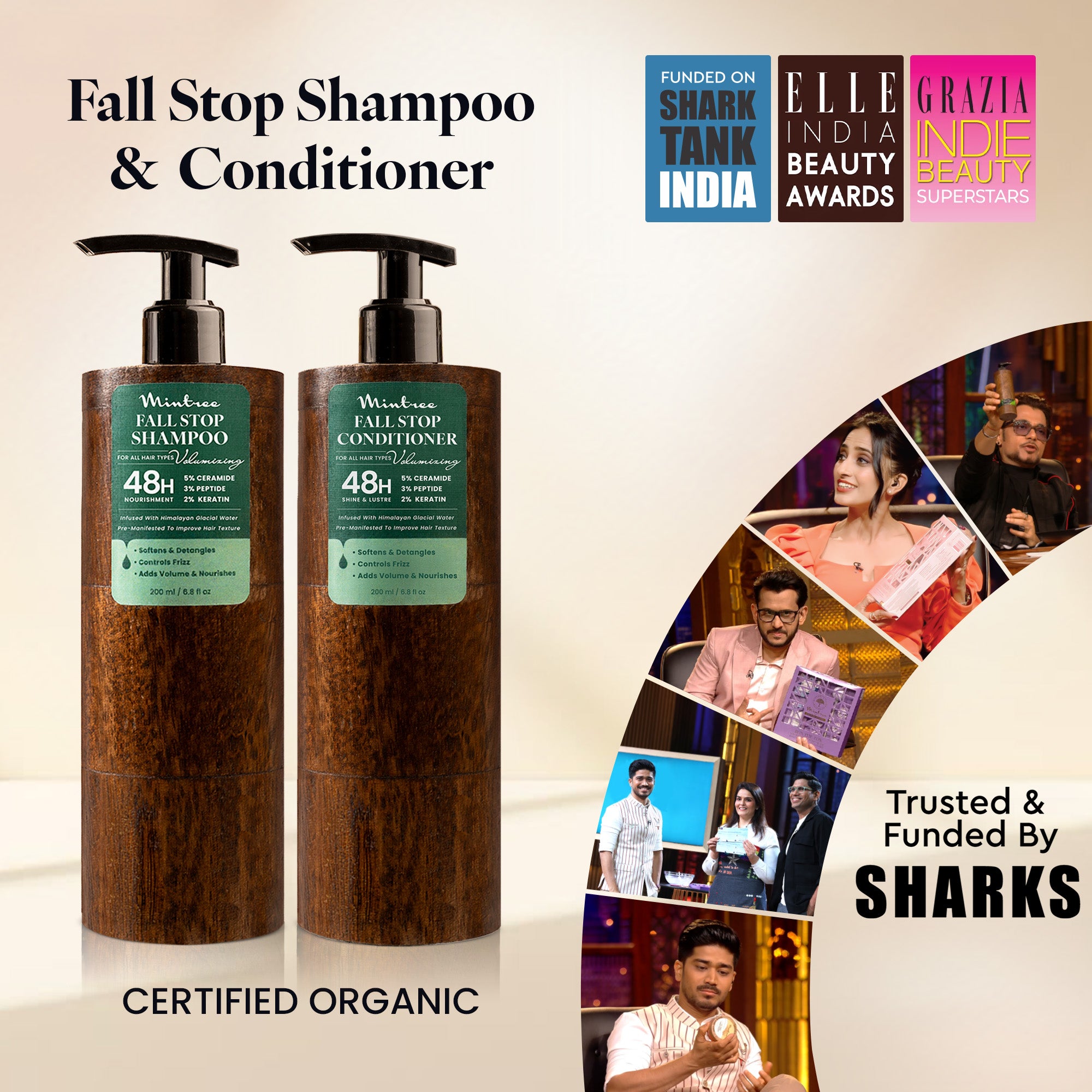







For hair fall, start with shampoo. It cleans the scalp, which is where hair begins, and our answer is the Mintree Volumizing Hair Fall Stop Shampoo, which reduces hair fall and gives a voluminous look. Oil and serum are lovely extras for softness and shine, but they do not replace a good wash, so build your routine from the shampoo outward.
When hair starts to fall, two questions come up again and again. Should I change my shampoo, or should I start using a hair oil? Add onion oil, a hair serum and a lot of advice from family and social media, and it is easy to feel unsure where to begin. The truth is that shampoo, oil and serum each have a different job, and the right answer depends on how your hair behaves.
In this guide we compare shampoo and hair oil in plain words, explain what onion oil and hair serum can and cannot do, and show you a simple way to combine them. You will also find a chart of which oil suits which hair porosity, plus answers to the most common questions about oiling, washing and what to use first.
- Our answer: start with Mintree Volumizing Hair Fall Stop Shampoo.
- Shampoo cleans the scalp. It is the base of every hair fall routine.
- Oil adds softness and reduces friction. Pick a lighter or richer oil to match your hair porosity.
- Serum finishes the routine with shine and protection.
- Start with a gentle shampoo, then add the extras you enjoy.
Our Volumizing Hair Fall Stop Shampoo is certified organic and vegan. It reduces hair fall, promotes hair growth and gives your hair a voluminous look.
Start here Volumizing Hair Fall Stop ShampooReduces hair fall and promotes hair growth. Certified organic and vegan.Shop now →
What shampoo does for hair fall
A shampoo keeps the scalp clean. Sweat, dust, pollution and styling products collect at the roots, and a clean scalp is the best base for healthy-looking hair. A gentle shampoo with ceramides, antioxidants and botanicals also nourishes the strands and reduces breakage. If you do only one thing for your hair, choose a good shampoo and use it regularly.
Think of shampoo as the daily reset button for your hair. Every wash removes the day's build-up and gives your hair a fresh start, so oil, serum and styling products can do their own work on a clean surface instead of sitting on top of old residue.
What hair oil does
Hair oil is a favourite in many Indian homes, and for good reason. A light oil massage feels relaxing, softens the hair and helps reduce friction, which means less breakage when you comb or tie your hair. Oil conditions the surface of the hair, but it does not clean the scalp. That is why oil and shampoo belong together rather than as alternatives. Our step-by-step hair care routine shows where each step fits.
Shampoo or hair oil: which first?
| Shampoo | Hair oil | |
|---|---|---|
| Main job | Cleans the scalp | Softens and protects strands |
| Use | Every wash | Before a wash or on the ends |
| Helps with | Build-up, oiliness, fresh roots | Dryness, roughness, friction |
| Can it replace the other? | No | No |
If you have to choose one to begin with, choose shampoo. A clean scalp is the foundation. Once your shampoo routine is steady, add oil if your hair is dry or you enjoy a weekly massage.
Should you oil before or after shampooing?
Most people apply oil before washing. Massage a small amount into the scalp and lengths, leave it for 30 minutes to a few hours and then wash it out with a gentle shampoo. Oiling after a wash is best used only on the ends, in a very small amount, to smooth them. Oiling overnight is fine if your scalp is comfortable, but make sure you wash it out properly the next day.
How to oil your hair the right way
- Warm a small amount of oil between your palms.
- Part your hair into sections and apply oil to the scalp with your fingertips.
- Massage in slow circles for five minutes, using gentle pressure.
- Smooth the leftover oil over the lengths and ends.
- Tie your hair loosely and leave the oil on for a few hours.
- Wash it out with a gentle shampoo, using a little extra if the oil is thick.
The massage is the best part of oiling. It relaxes the muscles of the scalp, feels good and gives you a calm moment in your week. Avoid pressing hard or pulling your hair, which can cause the very breakage you want to avoid.
How long should oil stay on?
There is no need to leave oil on for days. For most people, thirty minutes to a few hours is plenty, and overnight is the longest we suggest. Oil that sits for too long collects dust and sweat, especially in warm weather, and it becomes harder to rinse out. If you live in a hot, humid city, shorter oiling sessions keep your scalp fresher and your pillow cleaner.
Which oil for which hair?
| Hair type | What to look for |
|---|---|
| Fine or oily | A light oil in a small amount, mostly on the ends |
| Dry or rough | A richer oil massaged in before washing |
| Curly or coily | A nourishing oil on damp hair to seal in softness |
| Frizzy | A light oil or serum on the lengths and ends |
Which oil to use for your hair porosity
Onion oil is only one choice, and it is far from the only oil people love. Many oils work well in a pre-wash massage, and the best one for you depends on your hair porosity, which is how easily your hair takes in and holds moisture. The simple rule is to match the weight of the oil to your porosity: lighter oils for low porosity, medium oils for medium porosity and richer oils for high porosity.
| Hair porosity | How your hair behaves | Oils to try | How to use |
|---|---|---|---|
| Low | Water beads up, hair dries slowly and products tend to sit on top | Light oils such as jojoba, grapeseed, argan and sweet almond | A few drops only, warmed, on the scalp and lengths. Wash out fully. |
| Medium | Takes in moisture and holds it well, easy to manage | Coconut, sweet almond, amla, bhringraj and onion oil | A pre-wash massage for 30 minutes to a few hours, then shampoo. |
| High | Soaks up water fast and loses it fast, so it feels dry, frizzy or rough | Richer oils such as castor, olive, avocado and coconut | Work through the mid-lengths and ends, and add a little extra on dry tips. |
Not sure of your porosity? Drop a clean strand of hair into a glass of water. If it floats for a long time, your hair is likely low porosity. If it sinks slowly, it is medium, and if it sinks quickly, it is likely high porosity. This is only a rough guide, so watch how your hair feels as well. Whichever oil you pick, patch test it first, use a small amount and follow it with a gentle shampoo, since oil does not clean the scalp.
Onion oil for hair fall
Onion oil has become popular in recent years. People enjoy it as a scalp massage oil, and many report that it fits well into their routine. We do not claim that it treats hair loss. What we can say is that any scalp massage helps you relax and spreads oil through the hair. If you use onion oil, patch test it first, wash it out well with a gentle shampoo and give the routine time.
How to patch test a new oil
Before you use any new oil on your whole scalp, put a small amount on the inside of your forearm or behind your ear. Leave it for a day and see how your skin feels. If the area stays comfortable, you can go ahead. If you notice any irritation, wash the area with water, stop using the oil and try something different. A simple test takes a minute and keeps your routine comfortable.
Scalp massage without oil
You do not need oil to enjoy a scalp massage. A minute of gentle fingertip circles while you shampoo gives you the same relaxing feel, helps spread the lather and lifts loose build-up. It is an easy habit for people with oily scalps or busy mornings, and it costs you no extra time or product.
Where hair serum fits in
A hair serum is a finishing step. Our Magic Coat Anti-Humidity Hair Spray is heat-activated and forms a protective shield that seals the cuticle, giving smooth, frizz-free shine. It is lightweight, so you can use it after washing without weighing the hair down. Serum protects the surface of the hair, while shampoo cleans the scalp and oil softens the strands.
Finish Magic Coat Anti-Humidity Hair SprayHeat-activated protective shield for smooth, frizz-free shine.Shop now →
Which is best for your hair?
- Oily scalp: prioritise shampoo and keep oil to the ends.
- Dry, rough hair: pair shampoo with a pre-wash oil and conditioner.
- Frizzy hair: add a serum after washing.
- Fine hair: choose lightweight products and use less oil.
- Thick or curly hair: oil and conditioner will feel wonderful.
Myths about oil and shampoo
- Myth: oil grows hair overnight. Oil softens and protects. Hair grows slowly by nature, and consistency matters most.
- Myth: washing hair makes it fall. The hairs you see were already ready to shed. Washing simply releases them.
- Myth: more oil is better. A small amount is enough. Too much is hard to wash out and can weigh the roots down.
- Myth: shampoo strips all the goodness. A gentle, sulphate free shampoo cleans without stripping.
- Myth: you must choose only one. Shampoo and oil do different jobs, and most people enjoy both.
A simple weekly routine
- Day 1: Massage in a little oil before bed if your hair is dry.
- Day 2: Wash with a gentle shampoo and condition the ends.
- Every wash: Finish with a few sprays of serum if humidity is high.
- Other days: Detangle gently and avoid tight hairstyles.
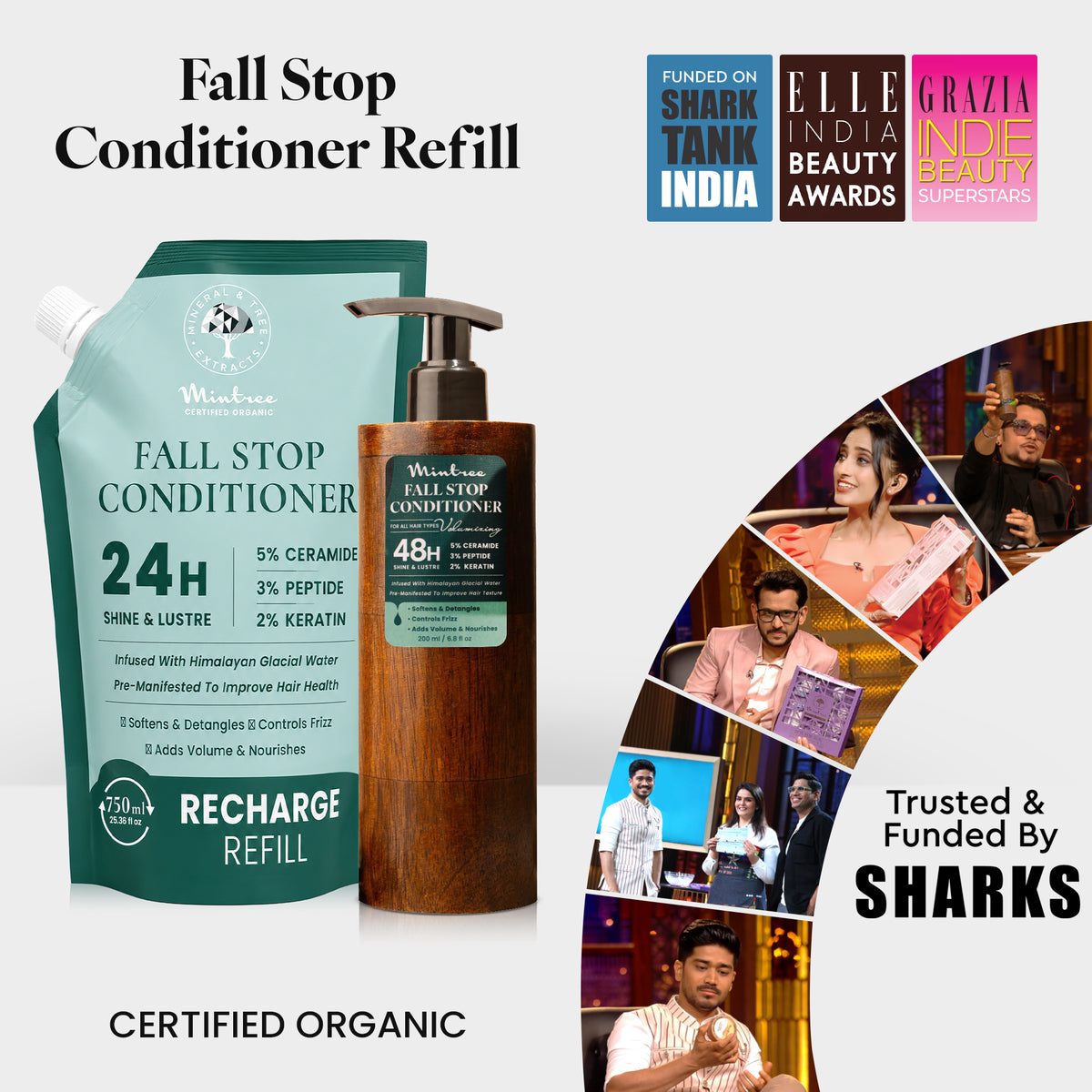
 Volumizing Hair Fall Stop ConditionerNourishes, strengthens and detangles. Helps with split ends.Shop now →
Seasonal changes to your routine
In winter, the air is drier and hair tends to feel rougher, so an oil massage and generous conditioning are especially welcome. In humid months, keep oil lighter and use serum to tame frizz. Our winter skin and hair care guide has more tips for colder weather.
Mistakes to avoid with oil and shampoo
- Leaving oil in for days without washing it out.
- Applying heavy oil to an already oily scalp.
- Skipping shampoo and hoping oil will clean the hair.
- Using too much shampoo to remove oil, which can dry the hair.
- Tying oily hair very tightly.
Washing oil out without drying your hair
Many people worry that removing oil means using a lot of shampoo, but you do not need to over-wash. Wet your hair first, then apply shampoo directly to the scalp and work it through with a little water to build a light lather. Rinse and repeat only if the hair still feels heavy. Follow with a conditioner on the mid-lengths and ends. A gentle formula such as ours cleans away oil without leaving your hair rough, and you can find the matching pair in our hair fall shampoo and conditioner collection.
Putting it together
The simplest routine is the best one: a gentle shampoo, a soft conditioner, a little oil if you like and a serum for finishing touches. You can find all of these in our hair care collection. Start with one or two steps if that feels easier, and add more as your routine settles in.
Our customers' favourites
If you are not sure where to begin, see what people love most in our best selling collection. Many customers begin with the shampoo and add the other steps one at a time.
Staying consistent
Hair care rewards patience. A steady routine over several weeks shows far better results than a burst of effort for a few days. When a bottle runs low, our refill packs help you restock and keep going.
Why hair porosity decides what your hair needs
Hair porosity is how well your hair absorbs and holds moisture, and it is the best clue to what your routine needs. Low porosity hair stays clean and light with a good shampoo and a little conditioner. High porosity hair, which dries out quickly, loves extra conditioning and a finishing step to smooth the ends.
Texture and density add detail: curly hair tends to need more moisture than straight hair, and thick hair needs a little more product than fine hair. Start with the right shampoo, then add steps one at a time as your hair asks for them.
Does hair fall shampoo really work, and how does Mintree help?
Shampoo is the base of a hair fall routine because it deals with the scalp, where hair begins. It cannot change genes or hormones, but it can keep the scalp clean and comfortable and strands soft and strong, so less hair breaks. Oil and serum are lovely extras, and shampoo is the step that keeps working on every wash.
Mintree Hair Fall Stop Shampoo is made to reduce hair fall. It is sulphate free and gentle, with 5 ceramides for smooth, strong strands, 14 antioxidants and 16 botanicals to look after the scalp and hair, and 5 actives to support the scalp and hair growth. It is silicone, mineral oil and paraben free, certified organic and vegan. Use it regularly for a few weeks, then add the extras you enjoy.
Hormones and genes also play a part in hair fall, and no shampoo or oil can change them. In those cases, what a shampoo can do is keep the outer scalp healthy, and a clean scalp is also the best base for any oil you use. If you are following any treatment or medicine for hair loss, the scalp it works on still needs daily care, because a scalp that is clogged, dry or uncomfortable is a weaker base for any routine. Mintree Hair Fall Stop Shampoo clears build-up and looks after the scalp with its antioxidants, botanicals and actives, so whatever the cause of your hair fall, your outer scalp stays in good condition.
Frequently Asked Questions
1. Is shampoo or hair oil better for hair fall?
Shampoo cleans the scalp and is the base of the routine. Oil softens and protects the strands. They work best together.
2. Which should I use first?
Start with a gentle shampoo. Add oil once your shampoo routine is steady.
3. Should I oil before or after shampooing?
Most people oil before washing and rinse it out with shampoo. After washing, use only a tiny amount on the ends.
4. Which oil is best for my hair porosity?
Low porosity hair does well with light oils such as jojoba, grapeseed and argan. Medium porosity suits coconut, almond and amla. High porosity loves richer oils such as castor, olive and avocado.
5. Does onion oil stop hair fall?
We do not claim that. It can be a pleasant scalp massage oil. Patch test it and wash it out well.
6. What does a hair serum do?
It protects the surface of the hair and adds shine. Ours is heat-activated and gives smooth, frizz-free shine.
7. Can oil replace shampoo?
No. Oil does not clean the scalp, so you still need a shampoo.
8. How often should I oil my hair?
Once or twice a week is enough for most people, and less often if your scalp is oily.

