


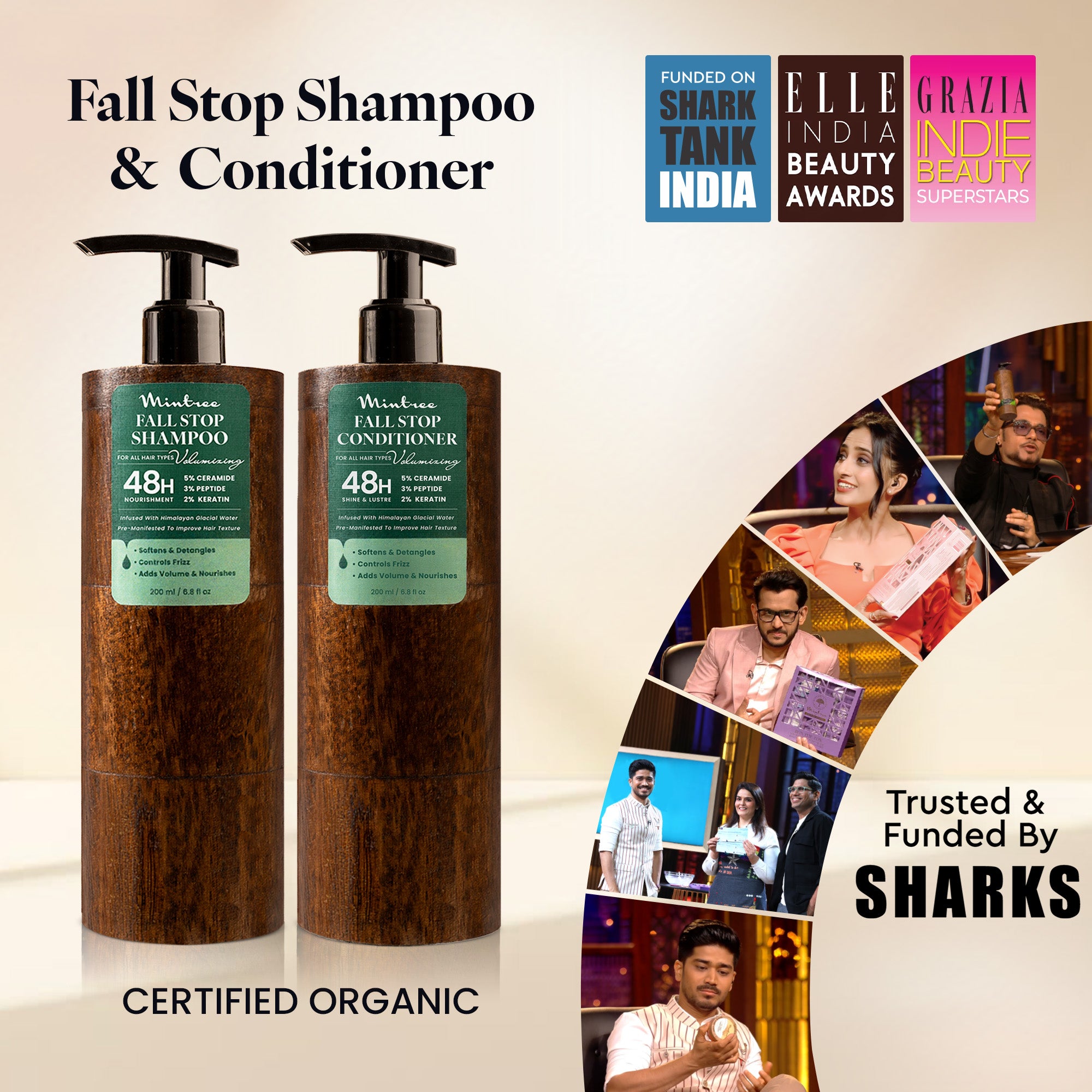







The best hair fall shampoo for an oily scalp, dry hair and most other types is a balanced, gentle one, and our answer is the Mintree Volumizing Hair Fall Stop Shampoo. It is sulphate, silicone, mineral oil and paraben free, certified organic and vegan, and made for all hair types and genders. Adjust how often you wash and how much conditioner you use to suit your hair.
No two scalps or heads of hair are the same. Your friend may have an oily scalp and straight hair, while you have dry, wavy hair that tangles easily. A shampoo that works beautifully for one of you may feel wrong for the other. That is why the best hair fall shampoo depends on your scalp type and your hair type, and why one size does not always fit all.
In this guide we help you work out your scalp and hair type, and we explain how to care for an oily scalp, dry hair, low porosity hair, hair in hard water areas and a flaky, dandruff-prone scalp. You will also see how a gentle, balanced shampoo can suit almost every type, and how to adjust your routine for your own needs.
- Our answer: Mintree Volumizing Hair Fall Stop Shampoo, balanced and gentle for all hair types.
- Oily scalps need frequent, gentle cleansing and a light conditioner on the ends only.
- Dry hair needs gentle cleansing and richer conditioning.
- Low porosity and hard water hair benefit from clean, lightweight formulas.
- A balanced, sulphate free shampoo suits most scalp and hair types.
Our Volumizing Hair Fall Stop Shampoo is made for all hair types and all genders. It is certified organic and vegan, and it is sulphate, silicone, mineral oil and paraben free.
For all hair types Volumizing Hair Fall Stop ShampooGentle, balanced and suitable for all hair types. Certified organic and vegan.Shop now →
First, know your scalp type
| Scalp type | How it feels | What it needs |
|---|---|---|
| Oily | Roots look greasy within a day | Frequent gentle washing |
| Dry | Tight, sometimes flaky after washing | Mild cleansing and nourishment |
| Normal | Comfortable for a few days | A balanced, regular routine |
| Flaky | Visible white flakes | Regular, gentle cleansing and scalp care |
A simple test is to wash your hair, skip styling products and look at your roots after a day. If they look oily, your scalp is on the oilier side. If your scalp feels tight and itchy, it is likely dry. Knowing this helps you choose how often to wash and how much conditioner to use.
Best hair fall shampoo for an oily scalp
An oily scalp can make hair look flat and limp, and many people worry that frequent washing causes hair fall. In fact, a clean scalp is a comfortable one. Wash as often as you need with a gentle shampoo, focus the lather on the roots and apply conditioner only to the mid-lengths and ends. A lightweight, silicone free formula keeps the roots feeling fresh and the hair full of body.
Oily roots and dry ends
Many people have a combination: an oily scalp with dry, rough ends. This happens because oil collects at the roots while the ends, which are the oldest part of your hair, lose moisture over time. The fix is to treat the two zones differently. Shampoo only the scalp, let the suds clean the lengths as they rinse and keep conditioner strictly to the mid-lengths and ends. A light serum on the tips completes the balance.
Best hair fall shampoo for dry hair
Dry hair feels rough, tangles easily and breaks more often, so it needs extra softness. Choose a gentle, sulphate free shampoo that does not strip the hair, then follow with a good conditioner every wash. Leave the conditioner on for a few minutes and rinse with cool water. Our guide on the benefits of sulphate free shampoo for dry hair explains why gentle cleansing helps so much.
Best shampoo for low porosity hair
Low porosity hair has tightly closed cuticles, so it resists moisture and can feel coated when heavy products sit on it. The best approach is a lightweight, silicone free shampoo that rinses clean, followed by a light conditioner. Use lukewarm water, which helps the cuticle relax, and avoid piling on thick products. Gentle formulas like ours leave hair light and soft instead of weighed down.
A quick way to test porosity is to place a clean strand in a glass of water. If it floats for a long time, your hair is likely low porosity. This is only a rough guide, but it can help you pick lighter products and a gentler routine.
Hair fall shampoo for hard water
Hard water leaves mineral deposits on the hair and scalp, which can make hair feel dull, rough and dry. If you live in an area with hard water, you may notice that your shampoo does not lather as well as it used to. A clean, gentle formula helps, and so does a thorough rinse. You can also use a conditioner on the ends to restore softness. Our hair fall shampoo and conditioner collection gives you the pair you need.
Shampoo for a flaky, dandruff-prone scalp
A flaky scalp is common, and many people reach for a strong shampoo straight away. A gentler approach often works well: wash regularly with a mild shampoo, massage the scalp softly to lift loose flakes and rinse thoroughly so no product stays behind. Avoid scratching, and avoid very hot water, which can leave the scalp drier. Our shampoo is gentle and made for regular use, so it fits into this kind of routine easily.
Sensitive scalp
If your scalp feels easily irritated, choose a mild, sulphate free shampoo with a short, clear ingredient list. Use lukewarm water, apply only a small amount and rinse thoroughly. Introduce one new product at a time so you can see how your scalp responds. Our formula is certified organic and vegan, and made without sulphates, silicones, mineral oil and parabens.
Coloured or styled hair
Hair that is coloured, straightened or heated often needs extra softness. A gentle shampoo helps because it cleans without stripping the hair, and a conditioner on the mid-lengths and ends restores smoothness. Before you use tools, apply a heat-activated serum to protect each strand. Wash less often if you can, and always rinse with cool or lukewarm water.
Kids' hair and scalp
Children aged 5 and above can use our shampoo. Their scalps are often active and sweaty from play and sport, so a gentle wash a few times a week keeps them comfortable. Use a small amount, keep suds away from the eyes and rinse thoroughly. A little conditioner on longer hair makes tangles easier to brush out, which means fewer tears at bedtime.
Straight, wavy, curly and coily hair
Hair texture changes how it behaves. Straight hair shows oil sooner, so it often needs more frequent washing. Wavy and curly hair is naturally drier because oil travels slowly down the curls, so it loves conditioner. Coily hair is the driest and the most fragile, so it benefits from gentle handling and generous conditioning. The same balanced shampoo can work for each texture, as long as you adjust the amount of conditioner and the washing rhythm.
- Straight: wash more often, use a light conditioner on the ends.
- Wavy: condition well and detangle with a wide-tooth comb.
- Curly and coily: condition generously and handle gently when wet.
Fine hair versus thick hair
Fine hair can look flat if it is weighed down, so use a small amount of conditioner on the ends only. Thick hair can handle more product and often needs more conditioning time to feel soft. In both cases, a lightweight and clean formula gives the best base. Our shampoo adds a voluminous look to fine hair, and our conditioner softens thick hair.
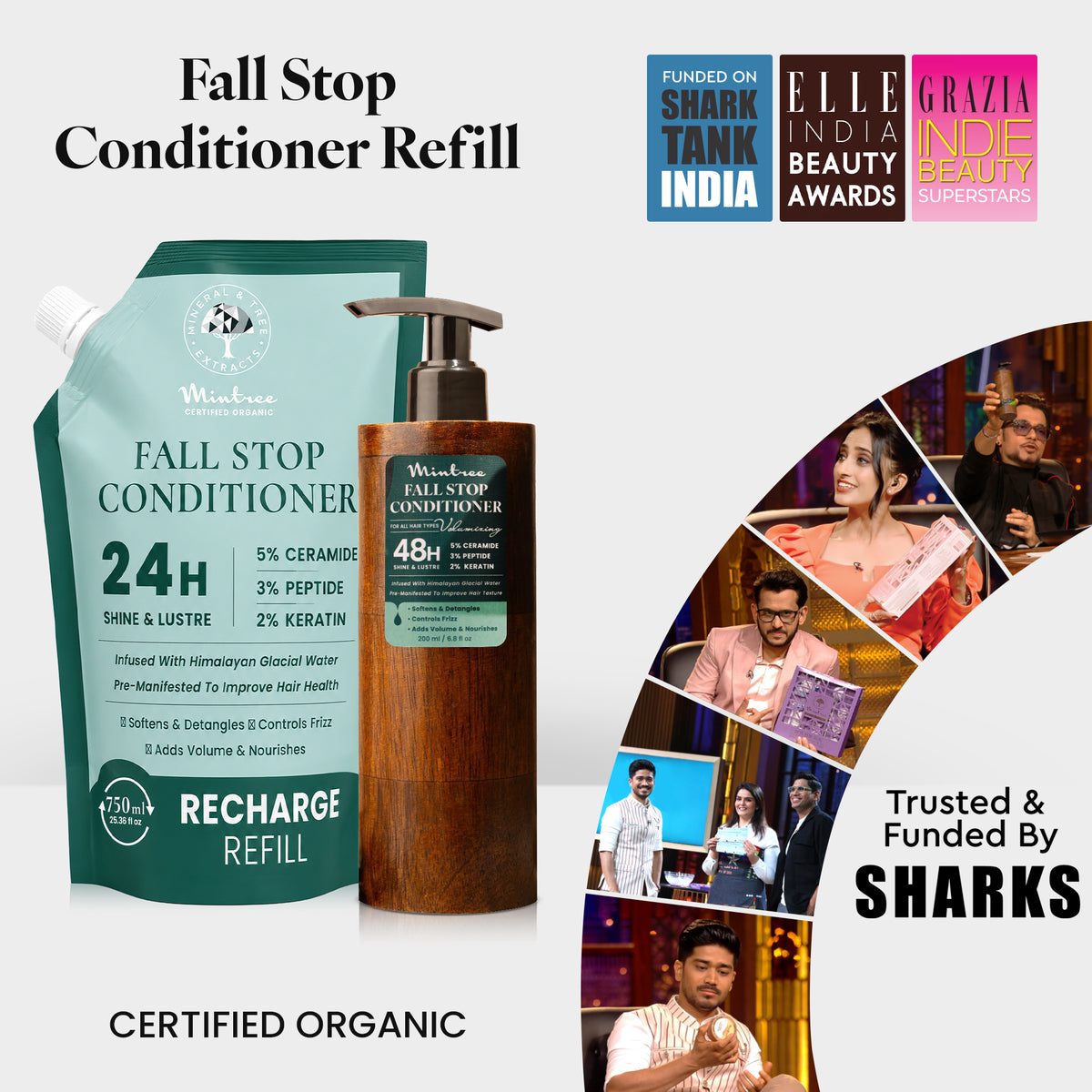
Pairs well Volumizing Hair Fall Stop ConditionerNourishes, strengthens, volumizes and detangles. Helps with split ends.Shop now →
Match your type to a routine
| Your hair | Washing rhythm | Conditioner |
|---|---|---|
| Oily and fine | Daily or every other day | Light, on the ends only |
| Normal and wavy | Every two to three days | Mid-lengths and ends |
| Dry and thick | Two to three times a week | Generous, left on a few minutes |
| Curly and coily | Once or twice a week | Generous, with gentle detangling |
Adjusting your routine with the seasons
Your hair changes with the weather. In hot, humid weather, the scalp gets oily faster and hair frizzes, so you may wash more often and use a light serum. In winter, the air is drier, so hair needs more conditioning. Our summer guide on how to take care of your hair this summer has more seasonal tips. A serum helps tame humidity and frizz all year round.
Anti-humidity Magic Coat Anti-Humidity Hair SprayHeat-activated protective shield for smooth, frizz-free shine.Shop now →
How often should you wash?
There is no single right answer. Oily scalps often feel best with a wash every day or every other day, normal scalps every two or three days, and dry scalps two or three times a week. Our shampoo is mild enough to use as often as you need. Watch how your scalp feels and let that guide you, rather than a rule you read somewhere.
A simple routine for every type
- Wet hair with lukewarm water.
- Apply a small amount of shampoo and massage the scalp gently.
- Rinse thoroughly, especially in hard water areas.
- Apply conditioner from the mid-lengths to the ends.
- Rinse with cool water and pat dry.
- Finish with a light serum if humidity is high.
When to change your routine
Your scalp and hair can change with age, seasons, stress and where you live. If your scalp becomes oilier, drier or more flaky than usual, adjust how often you wash and how much conditioner you use before you change your shampoo. Make one change at a time and give it a couple of weeks, so you can tell what is helping.
Stocking up
Once you find a routine that suits your scalp, consistency is the secret. You can see the full range in our hair care collection.
Customer favourites
Not sure what to try first? Our best selling collection shows what other customers love most.
Staying consistent
When a bottle runs low, our refill packs make it easy to restock without a gap in your routine.
Know your hair porosity as well as your scalp type
Scalp type is only half the story. Hair porosity describes how well the strands themselves absorb and keep moisture. Low porosity hair repels water and can feel coated or flat easily. Medium porosity is balanced. High porosity hair absorbs fast but dries out fast, which often shows up as frizz or rough ends.
You can have an oily scalp with high porosity ends, or a dry scalp with low porosity hair. That is why we suggest treating the scalp and the lengths separately: shampoo for the scalp, conditioner for the lengths. Texture and density add more variety, and a shampoo made for all hair types keeps the routine simple.
Does hair fall shampoo really work for every scalp and hair type?
A good hair fall shampoo works best when it suits your scalp and hair, because it then does its main jobs well: it cleans the scalp, softens strands and reduces breakage. It does not change genes, and the speed at which hair grows stays your own. Pair it with the right conditioner for your hair type, and you will see the brush get lighter over a few weeks.
Mintree Hair Fall Stop Shampoo is balanced and gentle, so it suits all hair types and genders. It is made to reduce hair fall, with 5 ceramides for strong strands, 14 antioxidants and 16 botanicals for scalp and hair care and 5 actives to support the scalp and hair growth. It is sulphate, silicone, mineral oil and paraben free, which helps oily scalps feel fresh and dry hair feel soft. Adjust how often you wash and how much conditioner you use to fit your hair.
Hormones and genes also play a part in hair fall, and no shampoo can change them. In those cases, what a shampoo can do is keep the outer scalp healthy, whether it is oily, dry, flaky or sensitive. If you are following any treatment or medicine for hair loss, the scalp it works on still needs daily care, because a scalp that is clogged, dry or uncomfortable is a weaker base for any routine. Mintree Hair Fall Stop Shampoo clears build-up and looks after the scalp with its antioxidants, botanicals and actives, so whatever the cause of your hair fall, your outer scalp stays in good condition.
Frequently Asked Questions
1. What is the best hair fall shampoo for an oily scalp?
A gentle, lightweight, silicone free shampoo that you can use often. Apply conditioner only to the mid-lengths and ends.
2. What is the best shampoo for dry hair?
A gentle, sulphate free shampoo followed by a good conditioner every wash. Our Hair Fall Stop Shampoo and Conditioner are made this way.
3. What suits low porosity hair?
Lightweight, silicone free products that rinse clean, used with lukewarm water.
4. Does hard water affect hair?
It can leave hair feeling rough and dull. A gentle shampoo, a thorough rinse and a conditioner on the ends help restore softness.
5. What should I do about a flaky scalp?
Wash regularly with a mild shampoo, massage gently, rinse thoroughly and avoid scratching or very hot water.
6. Can one shampoo suit every hair type?
A balanced, gentle shampoo suits most types. Adjust the amount of conditioner and how often you wash to fit your hair.
7. How often should I wash my hair?
As often as your scalp needs, from daily for oily scalps to two or three times a week for dry ones.
8. Can men, women and kids use it?
Yes. Our shampoo suits all genders, all hair types and kids aged 5 and above.

